Wednesday, April 6, 2011

Tsunades Beautiful Boobs

Hive Whenever there is less water and more pollution

Source: EFE

passed World Water Day , but the essential element for humans is still news. And is that the authorities continue to warn Japan of the danger it poses to ingest smaller tap water due to high levels of radioactive ontaminación c acquired after the incident Fukushima nuclear plant.

Add these incidents say indirectly as a result of human action, the fact that much of our planet's water is unfit for human consumption because of its high degree of c chemical or biological ontaminación , we see that every time there is less water for daily consumption. It is for this reason that water purification is an important method that all children have to know, and that man is the only way to harness the river water, rain, aquifers, etc.

For this reason, we propose you from a Educambiente simple but practical experiment that lets you teach younger children in what is one of the most common methods of water purification : scrubbing filtration (method in which water is passed through beds of sand and gravel for the water too turbid to become transparent and particles trapped in the muddy sand and gravel).


Source: Paloma Garaboa Bort
Materials:

sand gravel
plastic bottle scissors
cotton
2 cups transparent turbid


Steps:
  1. full of muddy water (water that have collected such a pool) a transparent vessel.
  2. Cut the plastic bottle at the bottom.
  3. Keep the bottle with the top to bottom, and then introduces the material in the following order: cotton, sand and gravel.
  4. Place the empty glass under the spout of the bottle and slowly pour the muddy water in the new "home sewage" we have built.

With this method we have to filter water before it was cloudy now is clear. You have to explain to children not so this is already drinking water (to be should spend a biological analysis performed by professionals). There is water fit for human consumption, yet another that can be used to water plants for example.

When a water is considered contaminated, this technique is used to apply a variant that involves placing a special charcoal filters, including sand and gravel, which adhere to particles and microorganisms.

Dare now with this new fun and easy experiment that you propose to teach the little ones something new! Surely they are willing to do that in class.

Monday, April 4, 2011

Zippo Fluid Dries Out

simulation games, when learning to play

Canonistas
Since the birth of our project, Educambiente we provide the educator concerned about the necessary resources that could provide support in organizing classes that were related to the topic ecological and environmental.
Games are a very useful and practical for children of all ages learn and develop their skills and time to enjoy all the good that offer group play. That is why it is considered that the games Learning by simulation are ideal to learn the specific values, and as in our case, values \u200b\u200bof care Environment.
What is a learning game simulation?
As its name indicates, is an educational and fun that is the representation of something, a specific situation that could occur in real life. The end of a simulation game is to learn through a simulated experience.

abanto-Zierbena
These games are not only used for environmental education, but that is a function of the educator to adapt the game to the needs of children . Nor is it only for children but often used in language classes to learn to cope in specific situations. That is, a resource that the teacher can adapt at will.
According to Fernando Kramer, in his book Practical Handbook environmental education four types of simulation:
1. Case Study
2. Game interpretation
3. Simulation Game
4. through computer simulation
Whatcom
Although all variants are particularly interesting, we will focus on two central: games and simulation performance. They may look almost the same, and the difference is that the simulation game requires more capacity for analysis by the players. It is also more complicated to prepare, because you need to anticipate situations and prepare materials that might be necessary. The classic game called Monopoly simulation is, of course this gives us values \u200b\u200bof consumption.
On environmental issues, a game of interpretation might serve to young children because it would give values \u200b\u200bof empathy and the ability to see the world through himself and through the actions of others. Furthermore, simulation games would be ideal for the ESO, where students have the capability for analysis.
Features
interpretation games:
· It focuses on individual actions
· gives rise to self-reflection
· Develops ability to understand other
· fosters communication between groups
· It assumes the personality of a particular person, with some concrete ideas.
· are simplifications of real situations.
How to create a set of interpretation?
The educator must take into account previous changes to create their own simulation game. In addition, you must know how to adapt the capabilities of their students and time available. The steps could follow:
1. Develop the situation from which we started. This situation must be related to the subject, entails a change in the environment, and create controversy: for example, the construction of a shopping center, which involves the removal of the forest where they want to locate the center.
2. Create the profile of the characters. If possible, translate it into small cards to distribute among students. Must conform to the level of the students. If they are elementary, express everything simply. For higher classes, we divide them according to ideology.
Sounds simple, right? Actually, not so much at the time of capture it on paper. So here we a small game project interpretation:
1 .- Location from which we started:
Puerto
Marplatense
Villa Flores is a medium city, whose economy is sustained by small and medium businesses in the city. However, one day, Granacero large construction company decided to build a shopping center and the only area that can fit in a forest north of the city. This raises the question, since the construction of a shopping center can bring both good and bad things. In the end, the Association of Residents of Villa Flores will meet to decide whether to build or not.
2 .- Character Profile:
· Rosa, who works for a florist in the city center. Vintage pink flowers in their gardens, located near the forest felled. Is worried that bring construction equipment can affect their crops.
· Sam, an unemployed person: Sam is a unique opportunity in the mall, he knows that, once built, will finally work. Besides, who knows, you might be hired soon to help in construction.
· Peter Granacero director: Pedro knows that the mall is a great investment, but also realizes the environmental problems can bring. In any case, go ahead with its project because it will bring benefits.
· Asuncion, director of the Ecological Association, as director of an organization concerned with the environment, Asunción is a mistake to think that construction as the destruction of the ecosystem that would create an imbalance in the environment of the city.
· Joachim, father of a child from school: as all parents, Joaquin is concerned about the health of children. And he believes that, even when it built the center, enjoy it, certainly that is good all the noise of the works will take to build it.
Of course, you can create many more characters, taking into account the number of students. You can also repeat the characters. The teacher or educator will also have their role, which is the President of the Neighborhood Association, because it serves as moderator at the meeting.
Once assigned characters, start with the discussion. Each character has a time reflection, and later will state their case, in addition to voting for or against.
final vote after the game, will be offered a time to think of all the students on the pros and cons of the situation. It should also provide what students have learned. You can also make a short summary of the environmental problems they encountered, such as noise pollution, deforestation, waste pollution or ecosystem damage
Resources:
Books: Practical Handbook environmental education Ferdinand Kramer. We can be of great help in making our own simulation games. You can buy it here

Friday, April 1, 2011

Mrs Fields Cookies Stock Symbol

Learn to care for the planet with

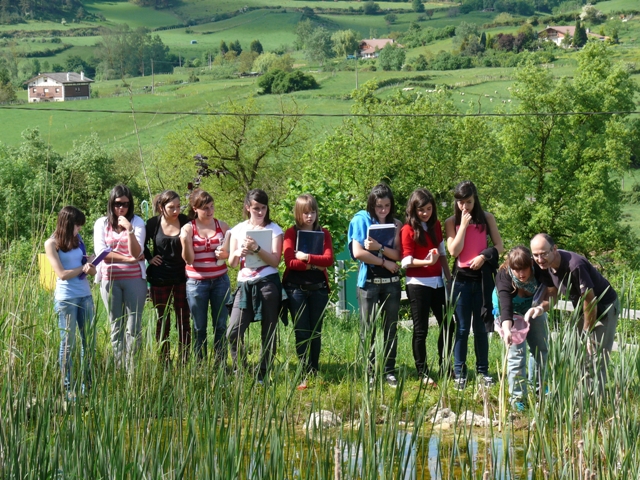
Image taken from http: / / www.andoain.org/
Increasingly, media, international organizations and NGOs the
that are echoing suffered critical state the planet. The deterioration of nature increases by leaps and bounds as pollution levels and irresponsible behavior of human beings is greater. To combat this controversial and problematic situation, diverse schools throughout Spain and various European countries joined increasingly a project known as Agenda 21 for Schools, derived from the so-called Agenda 21, 1992, which aims to boost sustainable development and help raise awareness among young about environmental issues .

Given the consequences they may have on humanity and other living things on Earth the deplorable state of nature, by the year 1992 representatives of 179 states gathered to adopt strategies to promote sustainable development program.
In this way, call the United Nations Conference on Environment and Development or Earth Summit held in the last 90 years in Rio de Janeiro, was derived known Agenda 21 .
However, to implement this project was necessary for each country to apply their own Local Agenda , depending on the characteristics of each power. "Think globally, act locally" is the basic idea would be collected from Chapter 28 of the Agenda.

This commitment to the planet by every city and country in Europe is reflected in the call Aalborg Charter adopted in 1994 by many European cities gathered in the Danish city of Aalborg in the first Conference European Sustainable Cities and Towns. Subsequently, and as the work of schools is essential to educate and teach citizens from early age the importance in the preservation and respect of the ecosystem, we chose to develop the Agenda 21 for Schools programs and content for educational communities in each country.

In Spain, more and more colleges and institutes to join this sustainability initiative. This Diary is no more than an educational program involving both students, teachers and non teaching staff (including parents or relatives) in achieving the improvement, respect and care for the environment.
goals that seeks to achieve, broadly, the educational community with this project are:


-Contribute to a class clear information on all issues linked to the environmental field, whether it's water, waste or energy, through educational workshops and enjoyable activities.

-Animate students to participate in environmental conservation , not only from your school or college, but also from his own home.

- promote initiatives, activities, projects, programs in various schools to address this issue.

- Account to the smallest of the serious consequences of human activity on the environment and long-term effects may have on the lives of people and other creatures that inhabit the planet.

"Achieving awareness of children to get a first approach to solving environmental problems today.

For a more sustainable school , among other things, should encourage in-depth knowledge of these environmental issues relating to the SUSTAINABILITY (climate change, pollution, consumption habits and transport, biodiversity), reduce, reuse and recycle (not to waste electricity and water do not accumulate large amounts of waste, introduce clean points in classrooms or dining areas), reducing air pollution from the use of renewable energy or energy conservation, communications activities (workshops, creation of Web pages or blogs), organic food (promote green and healthy food in canteens), contact with NGOs or experts to assist in driving conferences, support for the Centre, etc..

As discussed in previous lines, School Agenda 21 is a project that is having a depth and influence in many different colleges and institutes spread throughout Spain. Some of them have become internationally recognized as the Barcelona School Program Agenda has been awarded the Dubai International Award for best practices to improve living conditions. This award led by the Government of Dubai and administered in conjunction with the Habitat program called United Nations aims to promote sustainable development of human settlements on the basis of international cooperation.

Among others, the Basque Government has also been drawn together with over 20 schools in Sevilla, other goals in Castilla y León or in the English capital Madrid who have joined this project. Thus, the Departments of Education, Universities and Research of Environment, Planning, Agriculture and Fisheries Basque Country in 2011 will spend 880,000 Euros and 220,000 Euros in 2012 has put it into practice. For its part, the educational community in A Coruña notes that already the first steps to promote these initiatives.

The situation in the world can change for the better if man realizes and is aware that it owns the planet, but one more that should contribute to care and respect. Nature is responsible for its existence and development of a healthy quality of life. With projects such as Agenda 21 for Schools future generations will know a world where pollution and natural disasters have not been more than a bad memory.

For class:

-For users who want more information on the objectives and stages of development of the Agenda 21 for Schools can click on the following link which fully incorporates the contents of the agenda. PDF document focuses on specific fields such as water, energy, waste, and other urban areas.

"Also we propose a simple test consists of a series of questions to measure your ecological footprint, that is, knowing the volume of soil that correspond to each according to their respect and care environment. You can see by clicking this link.
-game also propose to measure the degree of commitment of participants to the care of the environment. It can be accessed by clicking this place.
"Through this link will access a video on Agenda 21 School sponsored by Caja Madrid, which can be used in class explanations to support teachers and entertain the subject